
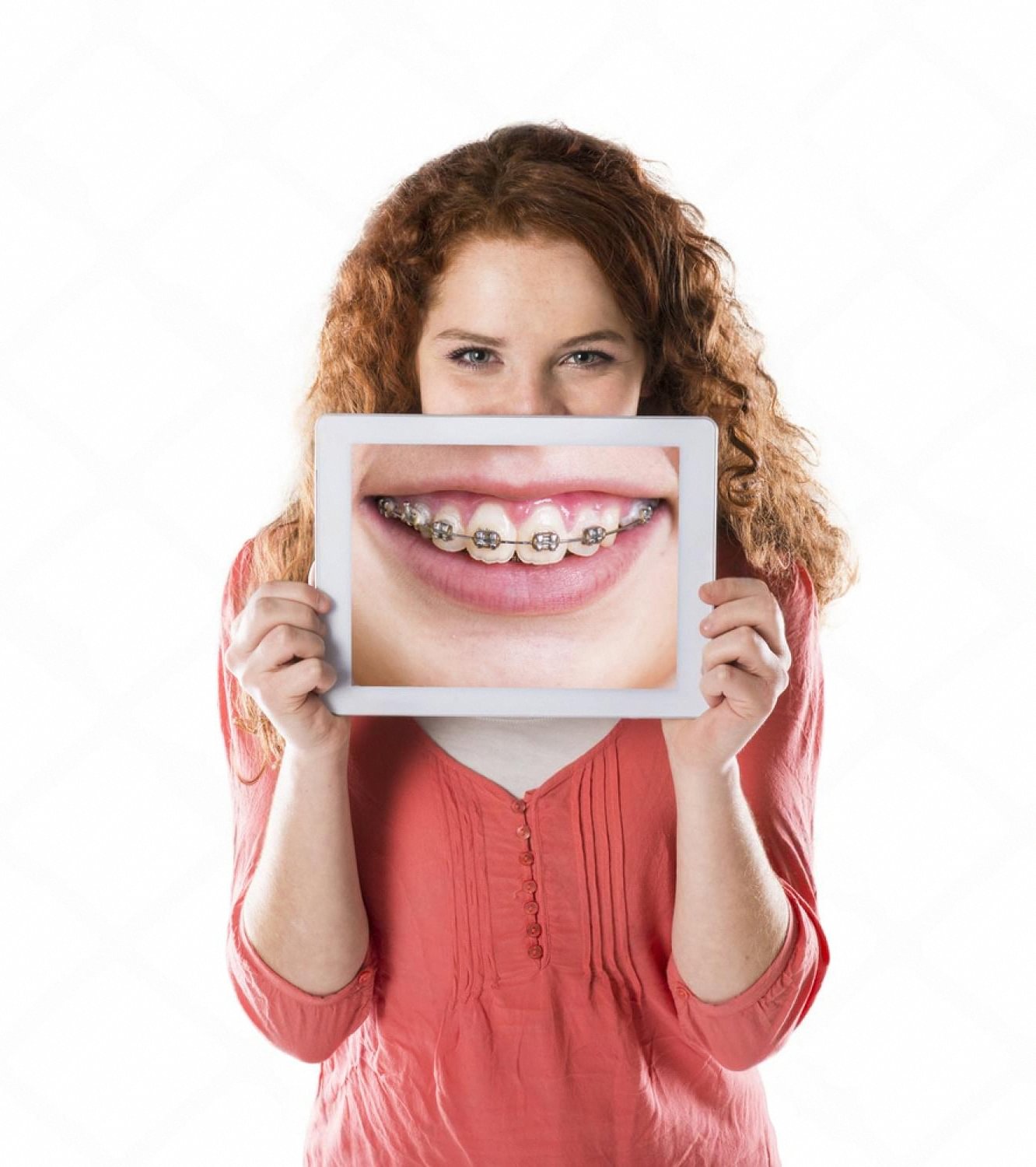
Orthodontic care checklist
Your daily routine with braces, without the guesswork
Braces work quietly in the background for 12 to 30 months. What you do at home each day decides whether that time ends with a healthy smile or with white spots, cavities, and gum trouble. This guide is written for readers in the UAE who want a simple, honest checklist they can actually follow.
Orthodontic treatment is not only about a straighter smile. Crowded or misaligned teeth are harder to clean, wear unevenly, and can put stress on the jaw joints over years. According to the World Health Organizationoral diseases affect close to 3.5 billion people globally, and much of that burden comes from problems that start with plaque sitting on tooth surfaces. Braces make those surfaces harder to reach, which is exactly why the home routine matters more, not less, while you are in treatment.
Whether you started as a teenager in Dubai or booked adult braces in Abu Dhabi to fix a bite issue you have lived with for years, the day-to-day habits below apply the same way.
The braces care checklist
- Brush after every meal. Not just morning and night. Food gets caught around brackets within minutes of eating, and the longer it stays, the more acid it produces.
- Use a soft-bristled brush and angle it at the brackets. Aim above and below each bracket, not just across the front of the tooth.
- Floss daily with a threader or a water flosser. Regular flossing is difficult with wires in the way, so switch to tools built for braces.
- Cut out hard, sticky, chewy, and crunchy foods. These are the main cause of broken brackets and emergency clinic visits.
- Wear elastics, retainers, or aligners exactly as prescribed. Skipping days undoes weeks of progress.
- Use an orthodontic mouthguard for sports. Football, basketball, martial arts, even padel: any contact means a real risk of cutting the inside of your lip on a bracket.
- Keep every scheduled adjustment appointment. Missing appointments stretches the treatment out for months.
- Watch for warning signs. Swollen gums, bleeding when brushing, loose brackets, or a poking wire all need attention, not a wait-and-see approach.
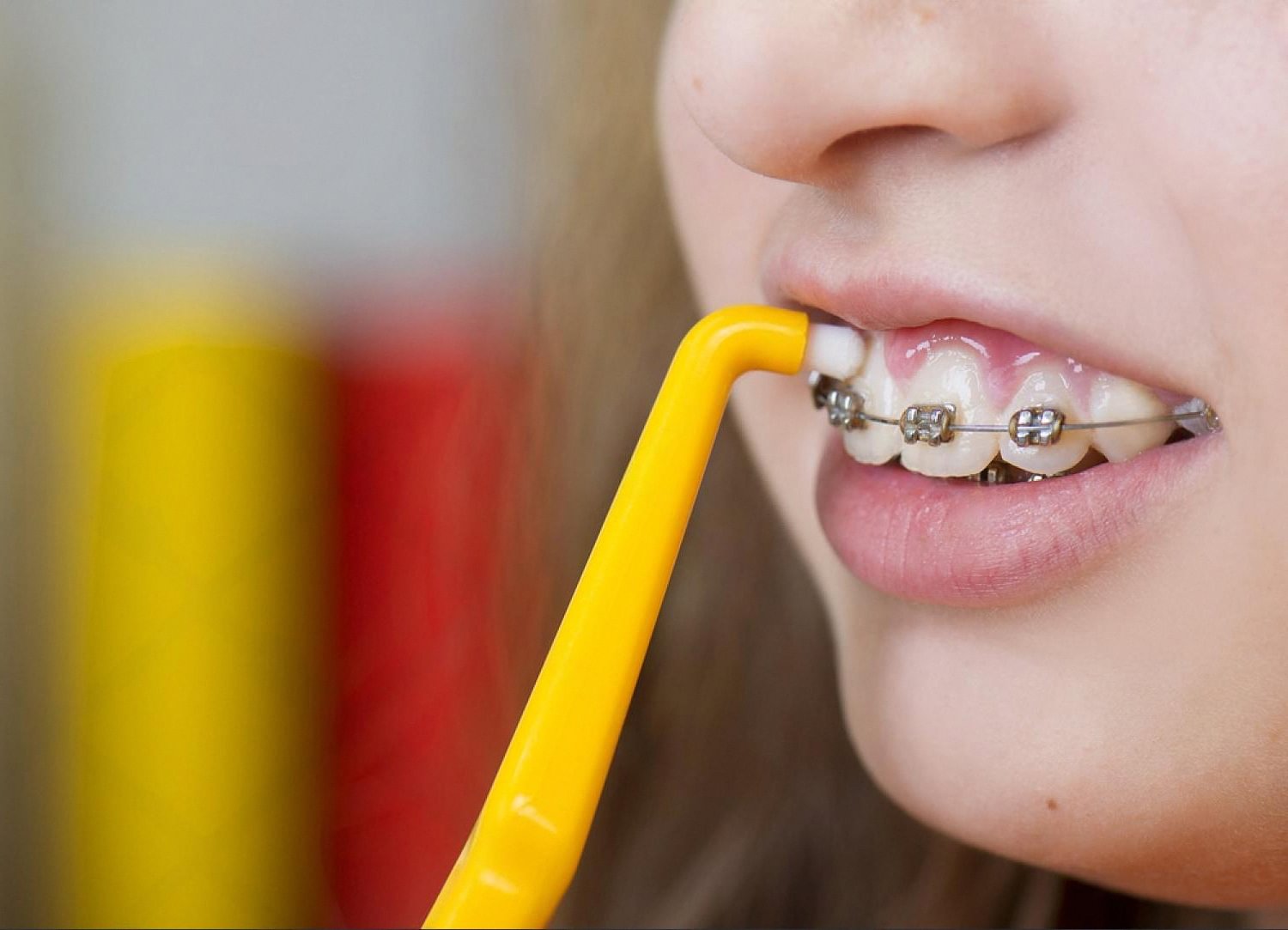
Item 1 and 2
Brushing that actually reaches the tooth
A bracket is a small metal or ceramic square glued to the front of each tooth, connected by a wire. That geometry creates four tight corners on every tooth where food packs in: above the bracket, below it, and along both sides of the wire. Rice, bread, chicken fibres, and dates get stuck there almost every time you eat.
Brush for two full minutes with a soft-bristled brush, holding it at a 45-degree angle to the gums. Do one pass above the wire, one below, and one flat across the chewing surfaces. An interdental brush, the small cone-shaped one shown above, slides under the wire and cleans the spots a regular brush cannot reach. A fluoride toothpaste is not optional during braces treatment: it is your main defense against the white decalcification spots that appear when brackets come off unclean teeth.
Foods to skip, and what to eat instead
This is where most people slip. A single bite of the wrong thing can pop a bracket loose and add weeks to your treatment. The good news is the list of banned foods is short and the swaps are easy.
Avoid
- Hard nuts, popcorn kernels, ice cubes
- Sticky sweets: toffee, caramel, chewy gum
- Whole dates with the pit, hard biscuits
- Crunchy raw carrots and apples bitten whole
- Crusty bread and hard flatbread edges
Eat freely
- Soft cooked rice, pasta, and grains
- Yoghurt, laban, soft cheese, hummus
- Cut fruit: sliced apple, pitted dates, banana
- Grilled fish, tender chicken, kofta
- Cooked vegetables and soups
A useful rule for eating out in the UAE: if you would need to tear at it, cut it with a knife first. That applies to shawarma, steak, and the crust on a manakish equally.
Quick reference: tools and typical costs in the UAE
| Tool | What it does | Typical UAE price range |
|---|---|---|
| Soft orthodontic toothbrush | Daily brushing around brackets | AED 20 to 45 |
| Interdental brushes (pack) | Cleans under the wire | AED 25 to 60 |
| Floss threaders or superfloss | Gets floss past the wire | AED 15 to 40 |
| Water flosser | Flushes debris out with water | AED 150 to 500 |
| Fluoride mouthwash | Extra decay protection | AED 20 to 50 |
| Orthodontic wax | Covers a poking wire until you can see the orthodontist | AED 15 to 30 |
| Boil-and-bite mouthguard | Sports protection over braces | AED 60 to 180 |
Prices are indicative, based on typical pharmacy and clinic ranges in Dubai and Abu Dhabi at the time of writing. Custom mouthguards made at your clinic will cost more but fit better.
Elastics, retainers, and extra appliances
If your orthodontist has handed you a small bag of elastic bands, or asked you to wear a removable appliance, treat it as part of the treatment, not an accessory. Elastics work by applying a gentle, continuous pull on specific teeth. That pull only works when the elastic is actually in your mouth. Taking them out for meals and sport is fine; taking them out for a whole day because you forgot is not.
Retainers come at the end. They hold the new position while the bone around the roots settles, which takes months. Most people who see their teeth shift back after braces are people who stopped wearing the retainer early. If a retainer feels tight after a few nights off, that is your teeth already moving, and a signal to wear it every night as instructed.
Sports, mouthguards, and everyday accidents
The UAE has a strong culture of sport, from school football to weekend padel and jiu-jitsu. Any impact to the mouth while wearing braces can cut the inside of your lip on a bracket and, in worse cases, damage the wire or a tooth. The American Dental Association recommends a mouthguard for anyone playing a contact or collision sport, and that recommendation is stronger, not weaker, when you have braces.
A boil-and-bite orthodontic mouthguard has extra room to accommodate brackets. Ask your orthodontist which type fits your current stage of treatment, because a guard bought before braces will not seat properly once the appliances are on.
Warning signs you should not ignore
Some discomfort after an adjustment is normal for two or three days. What is not normal, and what needs a call to your clinic:
- Gums that stay swollen, red, or bleed every time you brush for more than a week
- A loose bracket or a bracket that has rotated on the tooth
- A wire poking into the cheek that wax cannot cover
- Sharp, localised tooth pain rather than the general soreness after tightening
- Persistent bad breath despite thorough brushing, which often signals trapped food or gum inflammation
- A tooth that feels newly loose in a way it did not before
None of these fix themselves. Getting seen within a few days almost always means a five-minute repair. Waiting a month can mean weeks of lost progress.
The short version
Caring for braces is really just caring for your teeth on harder mode. Brush after meals, floss with the right tools, skip the foods that break brackets, wear what your orthodontist prescribes, protect your mouth during sport, and speak up when something feels wrong. Do that consistently and the day the braces come off will be the day you see exactly what you signed up for.
Frequently asked questions
How many times a day should I brush my teeth with braces?
Ideally after every meal and snack, so three to five times a day, plus once before bed. If you cannot brush after lunch at school or work, rinse thoroughly with water and use an interdental brush to clear food from around the brackets, then do a full brush as soon as you get home.
Can I use an electric toothbrush with braces?
Yes. Electric brushes with a soft round head clean well around brackets, as long as you slow down and let the brush sit on each tooth for a few seconds. Use a gentle pressure setting if your brush has one, because too much force can damage brackets and irritate the gums.
Is flossing really necessary if I brush thoroughly?
Yes. Brushing cleans the front, back, and top of teeth, but plaque between teeth needs floss or a water flosser to remove. Braces make those contact points even harder to clean, so flossing at least once a day, usually before bed, is the single biggest thing you can do to avoid cavities during treatment.
What should I do if a wire pokes my cheek?
Cover the sharp end with a small piece of orthodontic wax as a temporary fix, then contact your orthodontist for an appointment within a few days. Do not try to cut the wire yourself. If wax will not stay in place and the wire is causing an ulcer, ask for a same-day or next-day visit.
Can I drink coffee, tea, or karak while wearing braces?
You can, but be aware that dark drinks stain the elastic ties that hold the wire to the brackets, and can leave shadows on the teeth around them. If you have clear or ceramic brackets, the staining is more visible. Rinse with water after and try to keep sugary versions to mealtimes rather than sipping through the day.
How long does orthodontic treatment usually take in the UAE?
Most cases run between 12 and 30 months, depending on how complex the bite issue is and how well you follow the home routine. Missed appointments, broken brackets, and skipped elastics all extend treatment. Your orthodontist can give you a more specific estimate after taking scans and X-rays at the first consultation.
Will braces damage my teeth or gums permanently?
When home care is consistent, no. Problems like white decalcification spots or gum recession show up in patients who skip brushing and flossing for months. Regular hygiene visits during treatment, usually every three to six months, catch early issues before they become permanent.

Hello! My name is Lars Jensen, and I am a fitness enthusiast and a healthy lifestyle coach from Denmark. Moving to a hot climate completely changed my approach to training, hydration, and recovery. I had to adapt my routine, nutrition, and lifestyle to maintain maximum performance even in extreme heat.